Every year, billions of dollars in public benefits go unclaimed in the United States, leaving many families without tools that could strengthen their economic mobility. The consequences are significant: Urban Institute estimates that 365,000 North Carolinians could have stronger financial security and well-being if they were successfully enrolled in the safety net programs they already qualify for.
Public benefit systems often fail to reach the people who qualify for them.
Government systems are often challenging to navigate for people who need support. Different agencies run public benefit programs, each with its own rules for who qualifies, how to apply, and how to renew. On top of that, decades of structural racism have made these barriers even harder to overcome, especially for Black and immigrant communities. Policy changes, such as H.R. 1’s unprecedented cuts to programs like Medicaid and SNAP, worsen this issue and cause further confusion regarding eligibility.
Anthony Barnette, a longtime resident of North Carolina, never expected to need government assistance. Barnette was employed full-time when a government shutdown in 2025 suddenly left him without the means to buy food and other necessities.
“I’ve never applied for assistance before, and I had no idea I would even qualify,” Barnette said. “I’ve always tried to provide for myself as best as I could, but it was getting to the point that I was sitting around hungry, and I didn’t know where I was going to get a meal.” It wasn’t until Barnette turned to Shackle Free, a community-based organization dedicated to promoting holistic well-being and self-reliance in rural communities, that he was introduced to an online tool called MyFriendBen-NC.
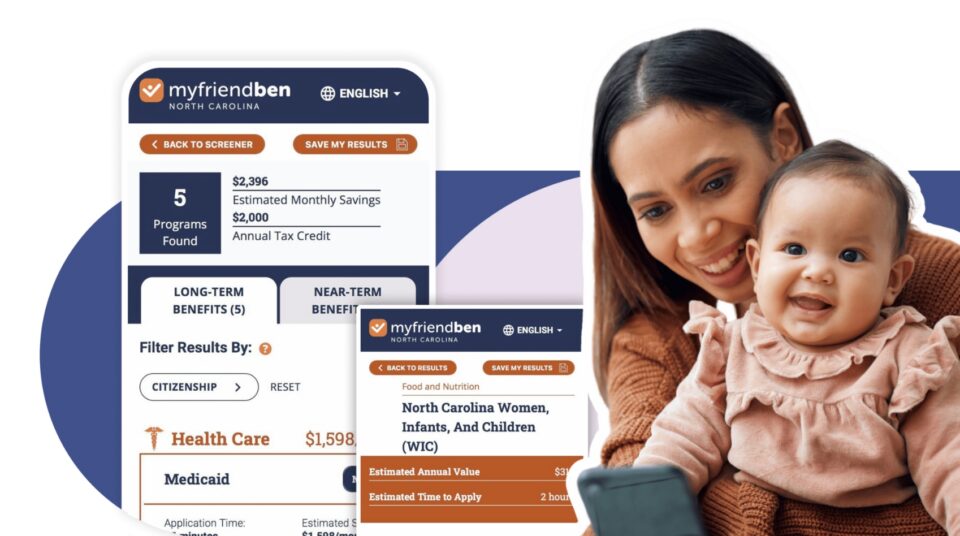
MyFriendBen-NC is an open-source screener designed to improve access to economic support by identifying eligibility for safety net programs. Through working with Shackle Free and MyFriendBen-NC, Barnette was able to connect with the support he needed, such as SNAP and unemployment assistance.
“MyFriendBen-NC showed me what was out there, which helped get the ball rolling. When you go from having nothing to something finally coming in, it’s a huge relief,” Barnette said.
MyFriendBen-NC helps identify available benefits, reducing barriers to support.
The groundwork for MyFriendBen-NC first began after many of the Kate B. Reynolds Charitable Trust (the Trust)’s community partners expressed a need for assistance helping the people they serve identify what government assistance programs were available to them based on their individual circumstances. In response, the Trust researched how other states had successfully streamlined the process of understanding eligibility for benefits.
“Programs like Medicaid not only improve health, they also improve economic mobility, and screeners have been proven to help more eligible people connect to benefits.” said Madison Allen, Health Improvement senior program officer at the Trust.
The screener was modeled after a similar program in Colorado and launched in North Carolina in 2025. It was brought to life through a partnership between the Trust and Code the Dream, a North Carolina-based nonprofit organization that builds technology while helping individuals with low-incomes start tech careers.
Code the Dream built a state-based eligibility screener with community, for community.
After building the screener, Code the Dream tested its effectiveness through a pilot with community-based nonprofits, serving diverse populations across the state. These organizations helped individuals use the screener, gathered feedback, and tracked what happened after they applied for benefits. The lived experiences of community members are a cornerstone of MyFriendBen-NC, providing insights to a system that is often fragmented and difficult to understand.
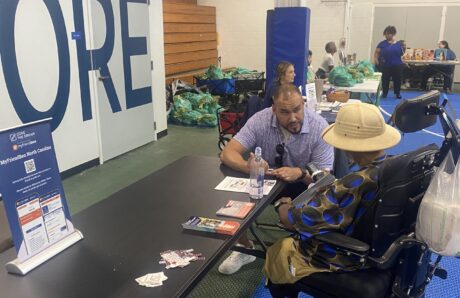
“Technology will never be a replacement for the work of communities,” Allen said. “This screener has been so successful because the need for it came from those working on the ground, and their input continues to impact the development of the screener today.”
MyFriendBen-NC is a one-stop shop that initially assessed eligibility for four benefits and has since expanded to include more than 20 government benefit programs. It also provides next steps to find local organizations that can assist residents as they apply. The mobile-friendly screener is available directly to individuals in 18 languages and is also used by community-based organizations, like United Way’s NC 211 and the North Carolina Navigator Consortium. State agencies are also helping build bridges for further modernization of the screener to help residents thrive.
“People who have never applied for benefits don’t realize how challenging it is. Having one place for people to get information about programs and feel confident it’s up to date is critical to closing the enrollment gap,” said Louise Pocock, senior public benefits analyst at Code the Dream. “The meaningful relational work community-based organizations do is a key part of how we can do that and engage people in the screener.”
The screener takes about five minutes to complete and serves all 100 North Carolina counties. Since launching in April 2025, MyFriendBen-NC has helped more than 43,000 residents and 18,000 households find an estimated total of $795.48 million in eligible benefits.
MyFriendBen-NC gives families the power to navigate complex systems.
MyFriendBen-NC helps ensure families and individuals know what programs they qualify for, empowering them to access the support they need.
“The screener is a tool for education and empowerment,” Allen said. “When someone goes in to apply for benefits, they will know that they are likely eligible and if they are denied, they know enough to push back and request an appeal.”
When using the screener, families and individuals can know their information is confidential and tailored to their needs. It is available for anyone to use, regardless of immigration, work, or education status, and offers helpful definitions and instructions for each step of the way.
“The systems we currently have aren’t built to make it easy for people,” said Dan Rearick, co-executive director of Code the Dream. “It’s very common for someone to receive only one benefit, despite being eligible for multiple. That’s why a screener is part of the solution.”
Code the Dream and the Trust hope to further expand the reach of MyFriendBen-NC in the state through partnerships with state government, health care systems, and local colleges and universities. As part of its open-source philosophy, MyFriendBen-NC will continue to evolve through the learnings of organizations across the country to meet communities where they are.