Federal and state budget cuts and decisions are having a profound impact on organizations and communities around the state and in our home of Forsyth County.
For this installment, we spoke with Marni Eisner, executive director of the Education Foundation for the Winston-Salem/Forsyth County Schools, about the implications of the state budget on our local school system.
- What is the mission of your organization and how are the government funding cuts or policy changes impacting your work?
At the Education Foundation, our focus is simple: helping WSFCS students succeed. We bring our community’s resources, expertise and energy to the needs of our public schools, investing in strategies that strengthen teaching and improve student outcomes. Cuts in state and federal funding make this work more challenging by limiting resources for staffing, instructional support and other student needs. They also reinforce the importance of our role as a community partner. We have leveraged philanthropy and partnerships to make strategic investments for the 2026-2027 school year in early literacy, educator pipelines and principal leadership while advocating for sustained public investment in our schools.
- WSFC Schools, with the help of many community donors, was able to pay off its debt. What has the impact of that been?
Because of the generosity of community donors, the support from the County and the sacrifice of WSFCS employees, WSFC Schools was able to eliminate its debt at a pivotal time. That financial freedom enabled the district to absorb essential teacher raises, protect the programs and people that make our schools strong, and build a more stable foundation for serving students and families in the years ahead.
- What should we do–as individuals, as organizations, and as a community–to counter this impact?
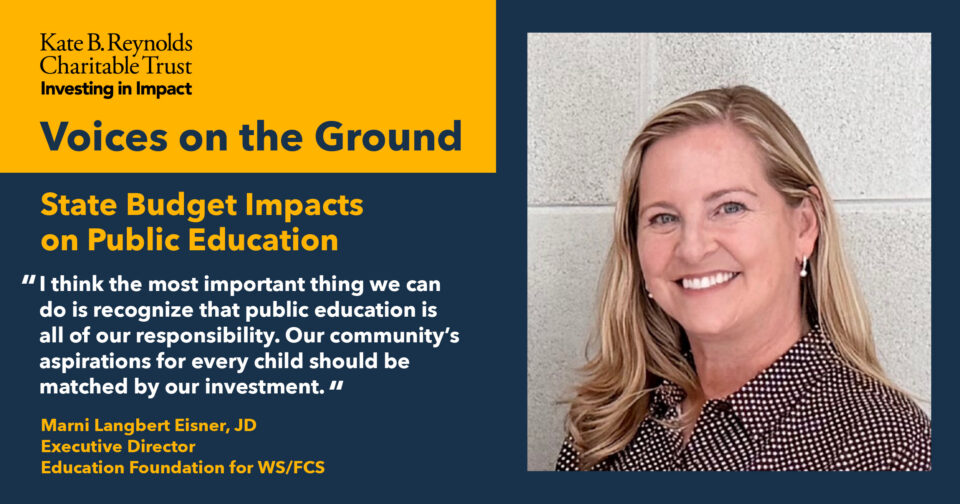
I think the most important thing we can do is recognize that public education is all of our responsibility. Our community’s aspirations for every child should be matched by our investment. We need to stay informed, make our voices heard, and continue showing up for public education—not just in a crisis. During the WSFCS budget crisis, businesses, foundations, nonprofits, families and individuals came together and raised millions of dollars. Just as importantly, we demonstrated how deeply this community cares about its schools. Now, we have an opportunity to build on that momentum and make that commitment lasting.