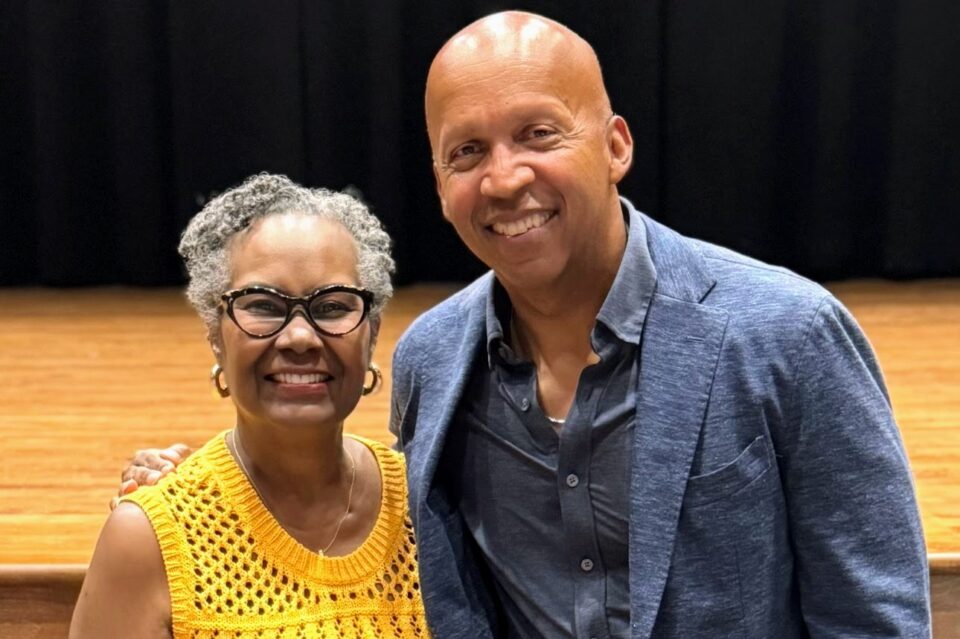
This reflection was first shared on LinkedIn by Trust President Dr. Laura Gerald, capturing the experiences and insights of the Trust team and Advisory Council members during our annual staff retreat in Montgomery.
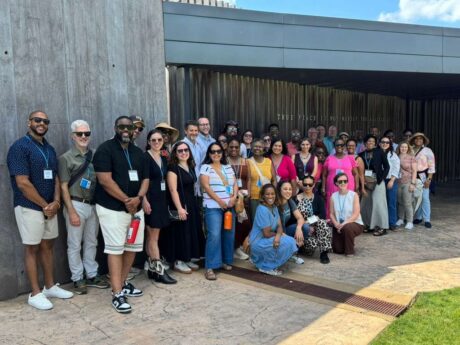
Last month, we took Trust staff, Trustees, and our Advisory Council members to Montgomery, Alabama to tour the Equal Justice Initiative (EJI) Legacy Sites and to speak face-to-face with Bryan Stevenson, the founder of EJI. This opportunity was a true career pinnacle for me.
I thank and commend the team at EJI for their work to elevate the truth of our nation’s history and uproot false narratives that perpetuate harm against communities deserving of justice.
For those of us working to improve health and well-being among historically marginalized people, we are doing so in a social climate and policy environment that feels frighteningly regressive.
However, going to Montgomery and engaging in this learning experience with our team was a sobering reminder that even as systems and policies have changed over time, harms of the past are still present.
We’re learning with leaders to strengthen our equity focus.
 At the Trust, our two Advisory Councils consist of nonvoting members who advise on our strategic approach to help communities thrive. By harnessing their insights, lived experiences and expertise through quarterly convenings and an annual retreat, we gain invaluable proximity to communities across our state and diverse perspectives on our work.
The purpose of this trip to Montgomery with our Advisory Councils, Trustees and staff was twofold.
First, we want to ensure that conversations about how we can improve the health and well-being of all North Carolinians start from a common place of understanding. Visiting Montgomery and learning about the history of terrorism, exploitation and dehumanization that Black and Indigenous people have experienced in our nation gives us shared insight about the inequities that persist today.
Second, this trip created opportunities for our entire team to be in community with one another in a completely different way.
With this being our first-ever Advisory Council retreat hosted outside of our home in NC, I want to thank Alice Dani Johnson and the Special Gathering team for expertly curating this experience and making this time together so impactful. We deeply appreciate their intentionality in designing a retreat that invigorated our sense of shared purpose while also engaging our shared faith and collective joy.
Systems change remains our shared purpose.
 I’ve heard many speakers and thought leaders throughout my career, but none have influenced my perspective on this work in the way Bryan Stevenson has. I have long admired his work, and his perspective on how we can meaningfully improve conditions for historically marginalized people resonates deeply with me. Having the chance to meet him and hear about the mission of EJI during this trip was profoundly impactful for me.
Bryan speaks about how establishing trust with community requires us to tell the truth about our history as a nation and as institutions to achieve true reconciliation and repair. This was especially resonant given how the Trust’s 75th anniversary focused on acknowledging the history of our founder and where our wealth originates.
But I cannot think of a more immersive and comprehensive example of truth-telling than what we experienced in Montgomery. The Legacy Museum, The National Memorial for Peace and Justice, the Freedom Monument Sculpture Park, and the newly developed Montgomery Square show us how the capture, sale, enslavement of, and violence against Black people is so deeply woven into the fabric and structure of our society. These sites honor the lives of the 10 million Black people who were enslaved and trafficked and illustrate Black people’s resilience and courageous, coordinated resistance to fight policies of oppression for hundreds of years.
Bryan spoke with our team about his work to elevate the important truths these Legacy Sites uplift. It was also during this opportunity to hear him directly that I realized how much I relate to his path that has informed his thinking and focus.
He shared with us how, much like myself, he was born and raised in a rural underserved area. He reflected on how fortunate he was to attend some of the world’s best academic institutions. He talked about, more or less, “falling” into a profession that shaped so much of his perspective on his current work.
I was especially struck by the fact that at a similar point in our careers, despite the fact that he practices law and I was practicing medicine, we recognized that outcomes and disparities we seek to change are rooted in systems. We both realized we could not change historically entrenched disparities by providing isolated, individual care.
Narrative change is how we sustain our progress toward justice.
The Legacy Sites brilliantly showcase that throughout history, in efforts to achieve justice and equality, we have seen an array of policy victories and defeats.
One of the things I’m reflecting on the most after meeting Bryan Stevenson is his focus on narrative change as a mechanism for sustaining and advancing social justice.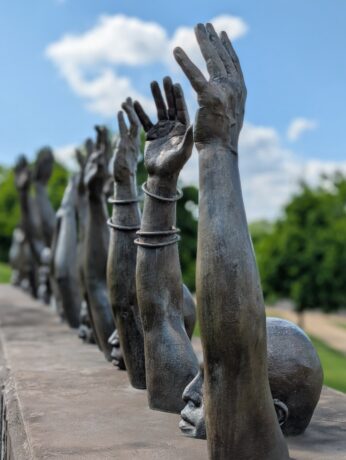
Underlying all injustice is a prevalent, false belief that some human beings are more deserving of basic, fundamental rights than others. What our history makes abundantly clear is that until we permanently eradicate the lie of difference that undergirds the unjust conditions we work to change, our resistance to oppression will be perpetual.
We cannot achieve justice until we change the beliefs that make us comfortable with immigrants being criminalized, public systems being weakened, and people in need being denied access to food and health care.
We have to supplant the false narrative of difference with the inevitable truth that honoring the equal humanity of all people creates conditions for a thriving community.
I thank Bryan Stevenson and the Equal Justice Initiative for their immense dedication and work.
I thank our Trustees for their support and our Advisory Council members who sacrificed the time away to have this experience with us.
It remains my hope that by acknowledging our history and telling the truth, we can change the narrative and work to envision a future that honors and supports the whole of humanity.